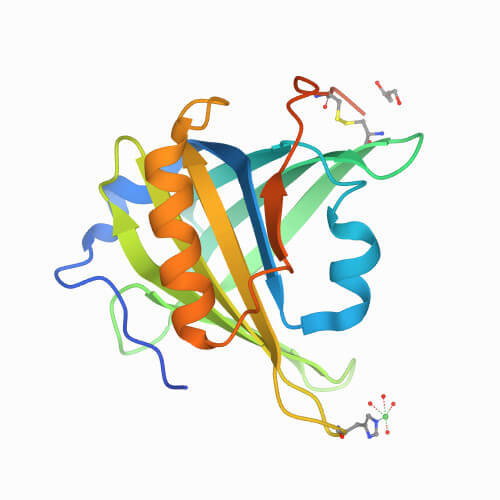
CA 15-3 is a mucin transmembrane glycoprotein expressed at the apical surface epithelium of the mammary gland, female reproductive tract, and stomach. It comprises three structural domains: a large and heavily glycosylated extracellular segment (exo-domain), a hydrophobic type 1 transmembrane region, and a short cytoplasmic tail domain involved in several signalling processes. An increase in the serum CA 15-3 shed ectodomain is associated with the progression of carcinoma in patients. CA 15-3 is a tumor marker primarily in the management of breast cancer. It is used as a positive control in the ELISA test kit for the detection of breast cancer.
Breast Cancer Antigen CA 15-3 (Partially Pure)
Product Code : 00-AGN-TM-BCA-001
Specifications:
| Parameters | Acceptance Criteria |
|---|---|
| Physical Appearance | Colourless to pale yellow liquid |
| CA 15-3 Concentration (ECLIA) | ≥ 4000 U/ml |
| Contaminants (ECLIA) | CA 125, CA 19-9, CA 72.4, CEA, AFP, Ferritin concentrations should be ≤ 25% of CA 15-3 concentration (On Roche Cobas 601) |
| Form | Liquid |
| Storage buffer | Phosphate buffer saline with 0.1% NaN3, pH 7.4 ± 0.2 |
| Storage temperature | 2 to 8˚C |
| Shelf life | 3 years |
| Anti HIV1&2 (ELISA) | Negative |
| Anti HCV (ELISA) | Negative |
| HBsAg Antigen (ELISA) | Negative |
| HBV DNA (PCR) | Not Detected |
| HCV RNA (PCR) | Not Detected |
| HIV DNA (PCR) | Not Detected |
| Source of the product | Human ascitic fluid from breast cancer patients |
For research use or further manufacturing purposes only