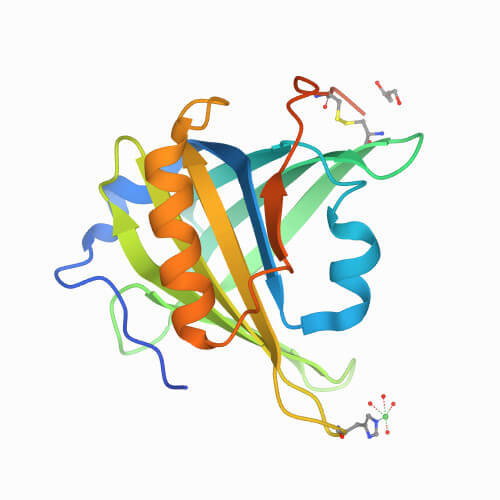
Prostate Specific Antigen (PSA) is a glycoprotein enzyme encoded by the KLK3 gene in humans. It is secreted mainly by the epithelial cells of the prostate gland into the seminal fluid. PSA belongs to the kallikrein-related peptidase family and acts as a serine protease, facilitating the liquefaction of semen by cleaving gel-forming proteins. Clinically, PSA serves as an important biomarker for prostate health management. Elevated PSA levels in blood may indicate conditions such as prostatitis, benign prostatic hyperplasia (BPH), or prostate cancer. PSA testing has played a major role in the early detection of prostate cancer.
Prostate Specific Antigen (PSA)
Product Code : 00-AGN-TM-PSA-001
Specifications:
| Parameters | Acceptance Criteria |
|---|---|
| Physical Appearance | Colourless to yellow liquid |
| Source | Human Seminal Fluid |
| Purity | >95% by 12% Non-Reducing SDS-PAGE, Coomassie Blue, major band or cluster of bands approximately at 20-35kDa |
| Storage buffer | 0.1M Tris Acetate buffer pH 6±0.2, containing 20% Glycerol and 0.1% Sodium Azide |
| Storage temperature | -20˚C |
| Shelf life | 1 years |
| Anti HIV1&2 (ELISA) | Negative |
| Anti HCV (ELISA) | Negative |
| HBsAg Antigen (ELISA) | Negative |
| HBV DNA (PCR) | Not Detected |
| HCV RNA (PCR) | Not Detected |
| HIV DNA (PCR) | Not Detected |
| Source of the product | Human Urine |
For research use or further manufacturing purposes only