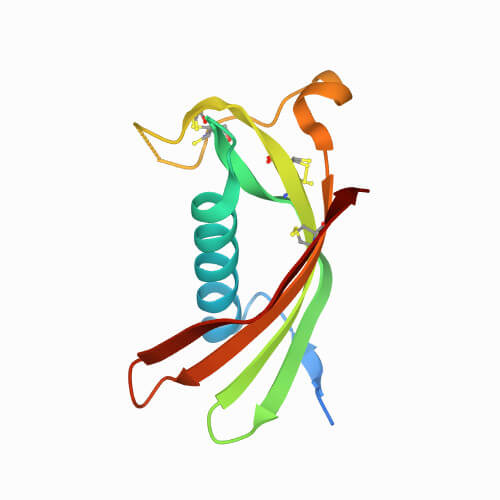
Retinol-Binding Protein (RBP) is a small (~21 kDa) transport protein essential for the safe and efficient delivery of retinol (vitamin A) throughout the body. Synthesized primarily in the liver, RBP forms a stable complex with transthyretin (TTR) in the bloodstream to prevent renal loss and degradation of retinol. As the primary carrier of retinol in the bloodstream, RBP ensures the delivery of this essential nutrient to target tissues, supporting functions such as vision, immune defense, and cellular differentiation. RBP plays a central role in vitamin A homeostasis by binding retinol within a specialized hydrophobic pocket, a hallmark feature of the lipocalin protein family. Its β-barrel structure enables secure transport of this crucial lipophilic molecule to target tissues. Altered RBP concentrations can affect insulin signalling by modifying tyrosine-phosphorylated IRS-1 and PI(3)K activation pathways, implicating it in the pathogenesis of insulin resistance.
Retinol Binding Protein (RBP)
Product Code : 00-AGN-RM-RBP-001
Specifications:
| Parameters | Acceptance Criteria |
|---|---|
| Source | Human Urine |
| Physical Appearance | Colourless to pale yellow liquid |
| RBP Concentration | As Observed by DRG ELISA & Nephelometry |
| Total Protein Concentration | As observed by OD at 280nm (Ext. Coefficient: 1.94) |
| Purity (SDS PAGE) | ≥95% |
| Buffer | 50 mM Phosphate buffer, 150mM NaCl, 0.1% Sodium Azide, pH 7.4±0.2 |
| Anti-HIV 1& 2 | Negative (ELISA Assay) |
| Anti-HCV | Negative (ELISA Assay) |
| HBsAg Antigen | Negative (ELISA Assay) |
| HBV DNA | Not Detected (PCR Analysis) |
| HIV DNA | Not Detected (PCR Analysis) |
| HCV RNA | Not Detected (PCR Analysis) |
| Storage Condition | 2-8ºC |
| Shelf Life | 1 year |
For research use or further manufacturing purposes only